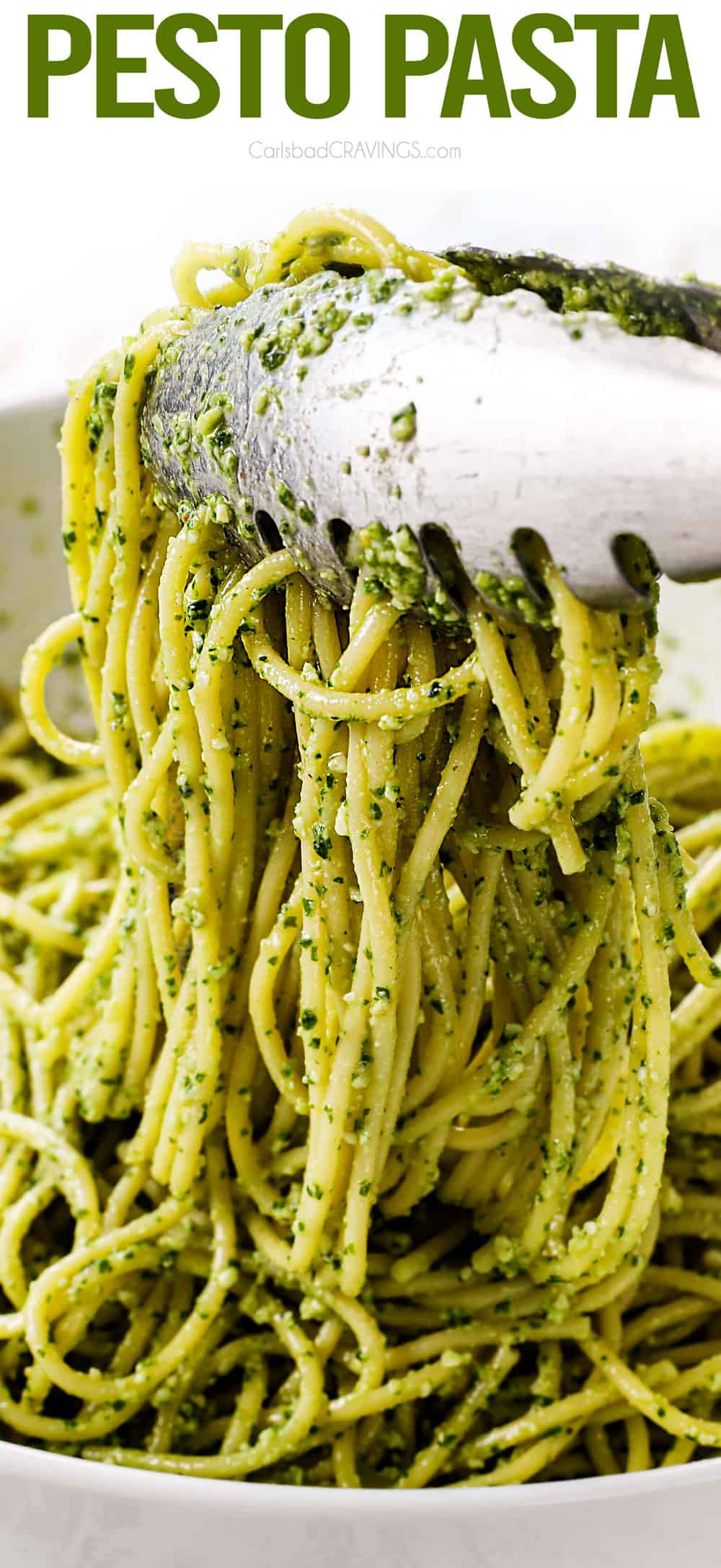
This Pesto Pasta is a must-have for your easy-dinner arsenal!
This Pesto Pasta is bursting with fresh basil, garlic, Parmesan, and a bright kiss of lemon. Thanks to expert techniques, every bite is silky, perfectly coated, and packed with bold, restaurant-quality flavor! Follow along for step-by-step photos, expert tips, and variations!
Watch: How to make Pesto Pasta
PIN THIS RECIPE TO SAVE FOR LATER

Why you’ll love this Basil Pesto Pasta
This Pesto Pasta recipe was tested and perfected for flawless flavor and texture, with expert techniques that elevate every bite into a silky, aromatic, restaurant-quality dish. Here’s why you’ll love it:

Basil Pesto Pasta Ingredients
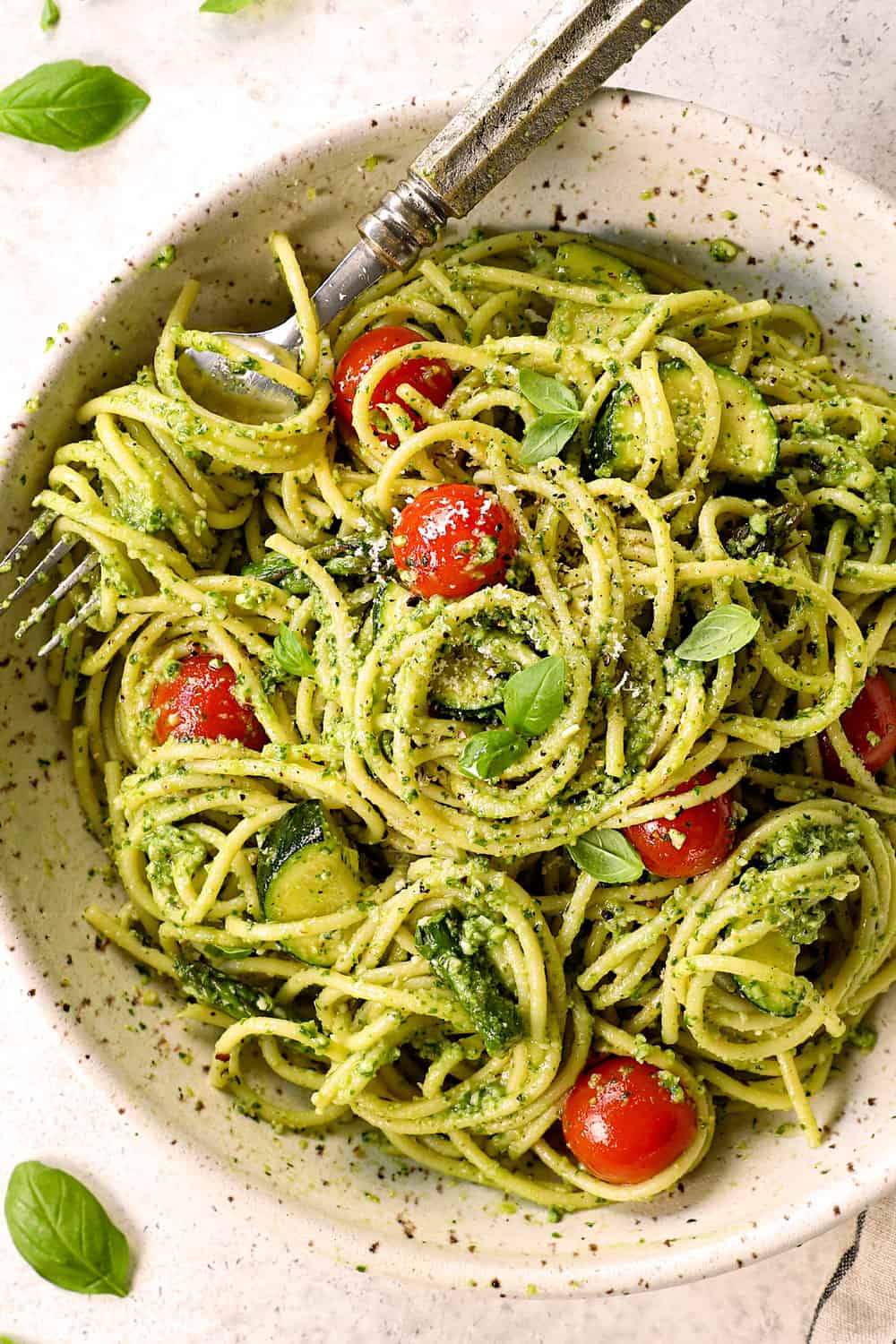
This easy Pesto Pasta recipe features homemade basil pesto sauce! Let’s take a closer look at what you need to make this recipe (measurements in the printable recipe card at the bottom of the post):
FOR THE PESTO

CAN I use store-bought shredded or grated Parmesan?
I don’t recommend store-bought shredded or grated Parmesan for the best pesto, but if needed, use shredded and reduce the amount to ½ cup (instead of ¾ cup fresh) since it’s more compact. You may also need to add a bit more olive oil to achieve the right texture.
FOR THE PASTA AND VEGETABLES
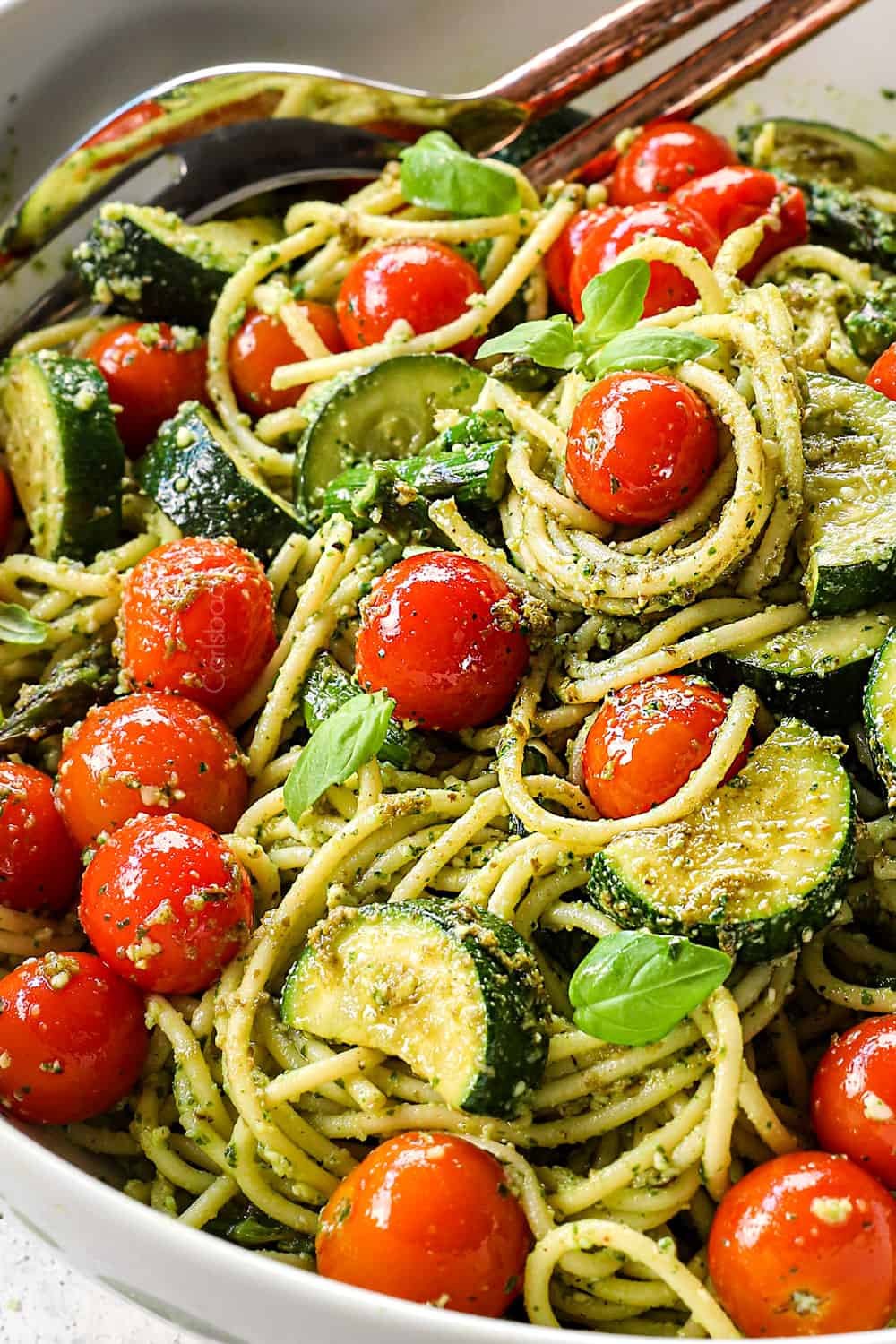
The vegetables are roasted with homemade pesto, olive oil, salt, and pepper. You can use the below vegetables or mix and match your favs with similar roasting times, or omit the veggies altogether.

What’s the Best pasta for pesto?
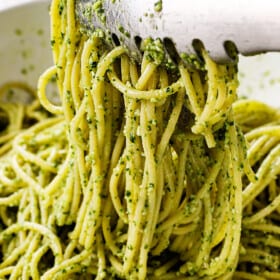
The best pasta for pesto is long, smooth shapes like spaghetti or linguine, which let the sauce glide evenly and coat each strand perfectly, and are a pleasure to slurp up.
Straight tubular pastas like penne or ziti also work well since the sauce clings easily to their surfaces. If using a more textured or spiral pasta, reduce the amount to 12 ounces so it doesn’t overwhelm the pesto or make the dish dry.

How to Make Pesto Pasta
Let’s take a closer look at how to make this recipe with step-by-step photos (full recipe in the printable recipe card at the bottom of the post):
Step 1: Roast the Vegetables
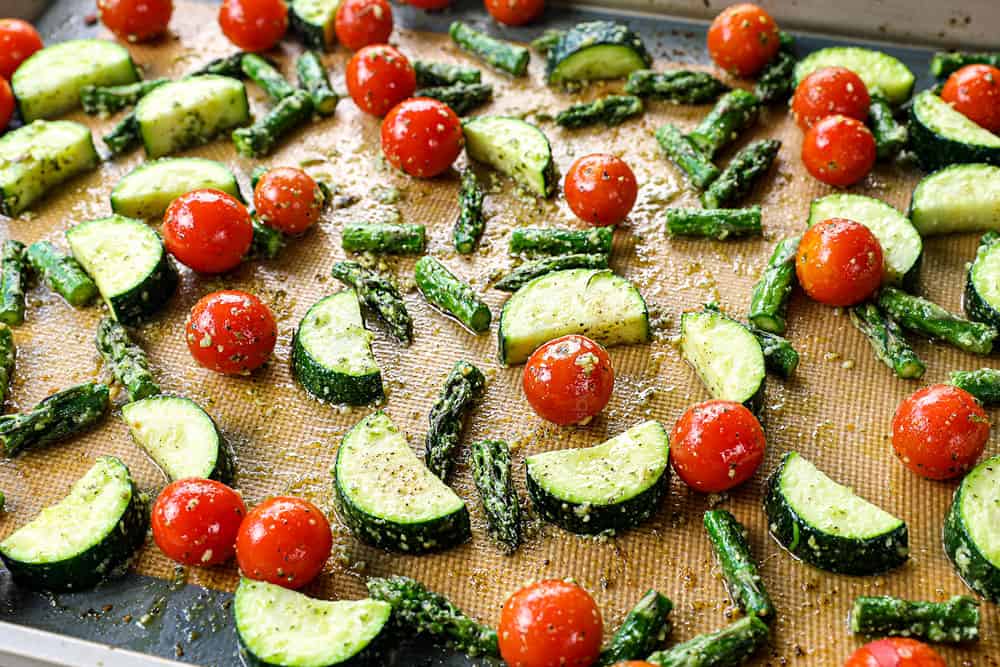
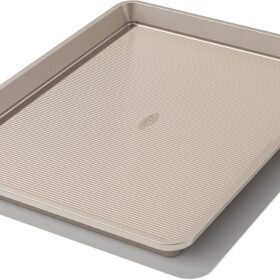
- Add the chopped veggies to a baking sheet and toss with a little pesto, olive oil, salt, and pepper. It will seem like a lot of oil/pesto, but it will be mixed into the pasta later for an extra-flavorful sauce.
- Spread the veggies out in a single layer once they’ve been seasoned and roast at 400ºF until the asparagus is crisp-tender.
Step 2: Make the Basil Pesto Sauce
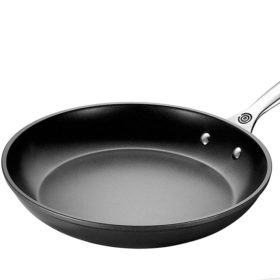
- Preheat a nonstick skillet over medium-high heat. Do NOT add oil to the pan!
- Add the pine nuts and toast them just until golden in spots. Immediately remove from the skillet so they don’t continue to cook. Be careful; pine nuts can go from being perfectly golden to burnt in a matter of seconds.
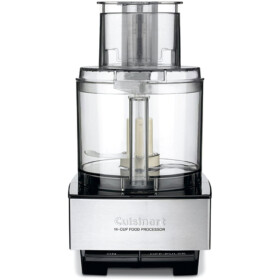
- Add all the pesto ingredients except the olive oil to a food processor and then pulse to chop.
- With the food processor running, slowly drizzle in the olive oil until fully combined.
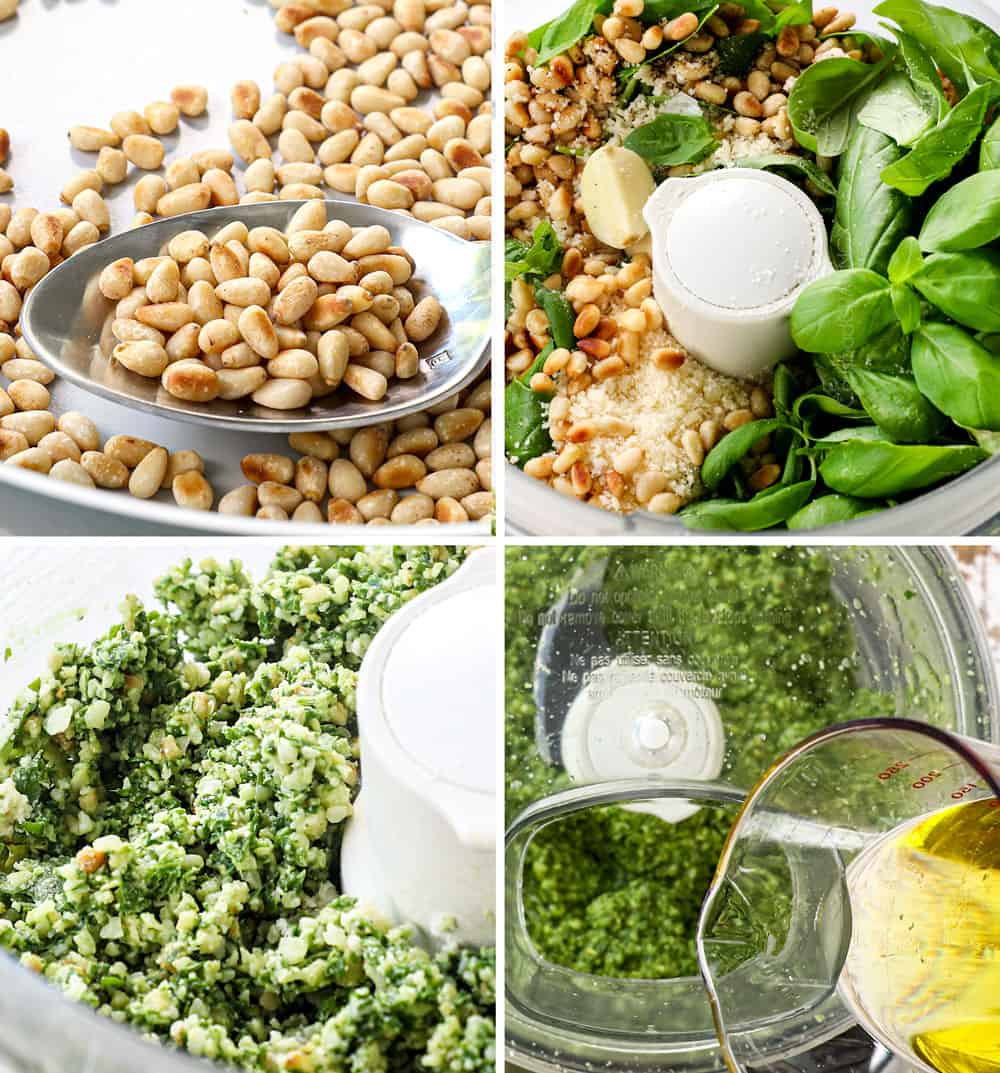
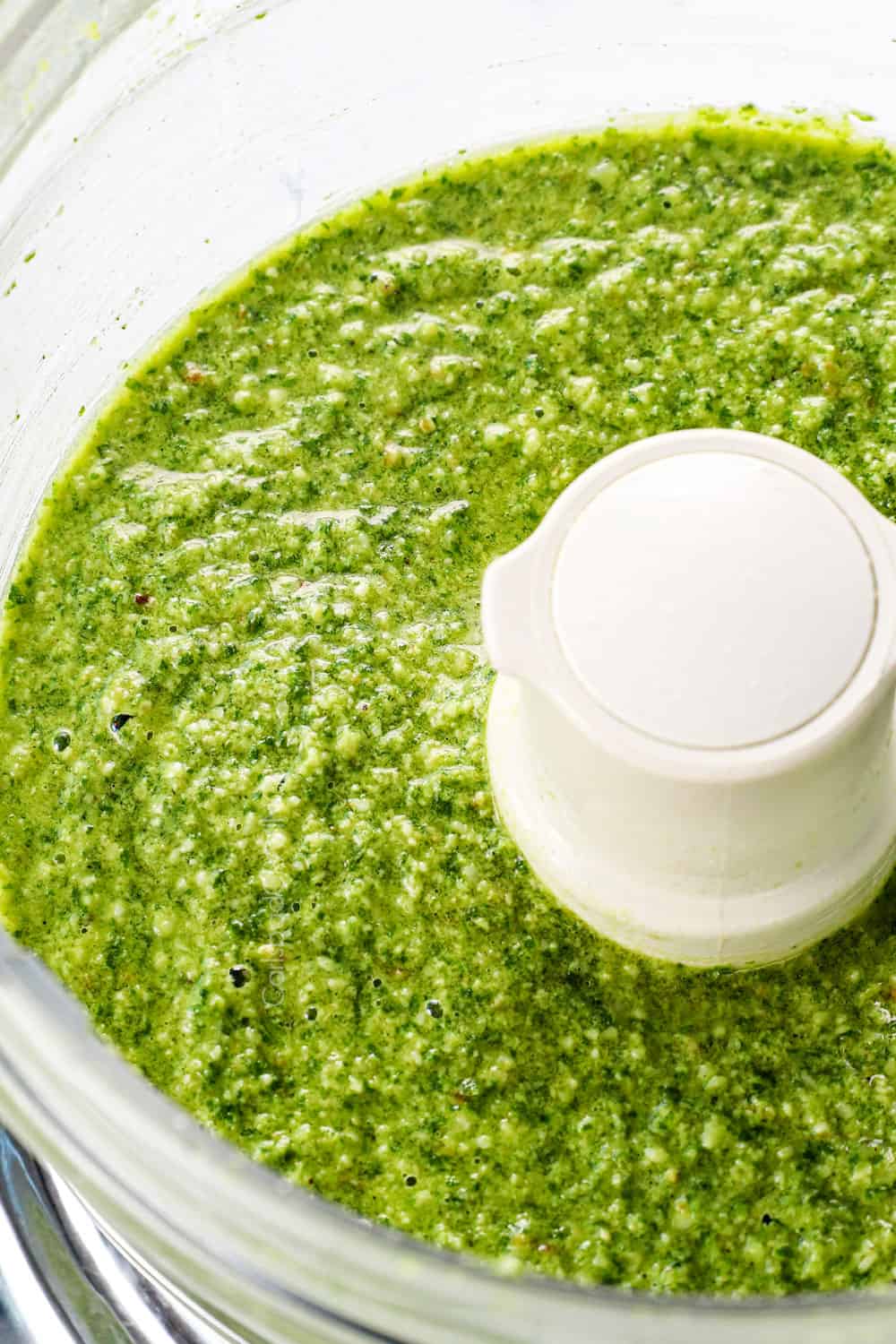
Step 3: Cook the Pasta
- Cook the pasta in salted water according to package directions. You want the pasta to be al dente, meaning it should still have some bite to it.
- Reserve 1 cup of the pasta water before you drain the pasta.
Step 4: Assemble the Pesto Pasta
- Add the drained pasta to a mixing bowl.
- Add the prepared pesto and additional lemon juice.
- Toss to coat pasta in pesto, adding reserved pasta water a little at a time if needed to make the pasta silky and saucy, rather than dry and sticky.
- Stir in the roasted vegetables.
- Serve immediately, garnished with freshly grated Parmesan.
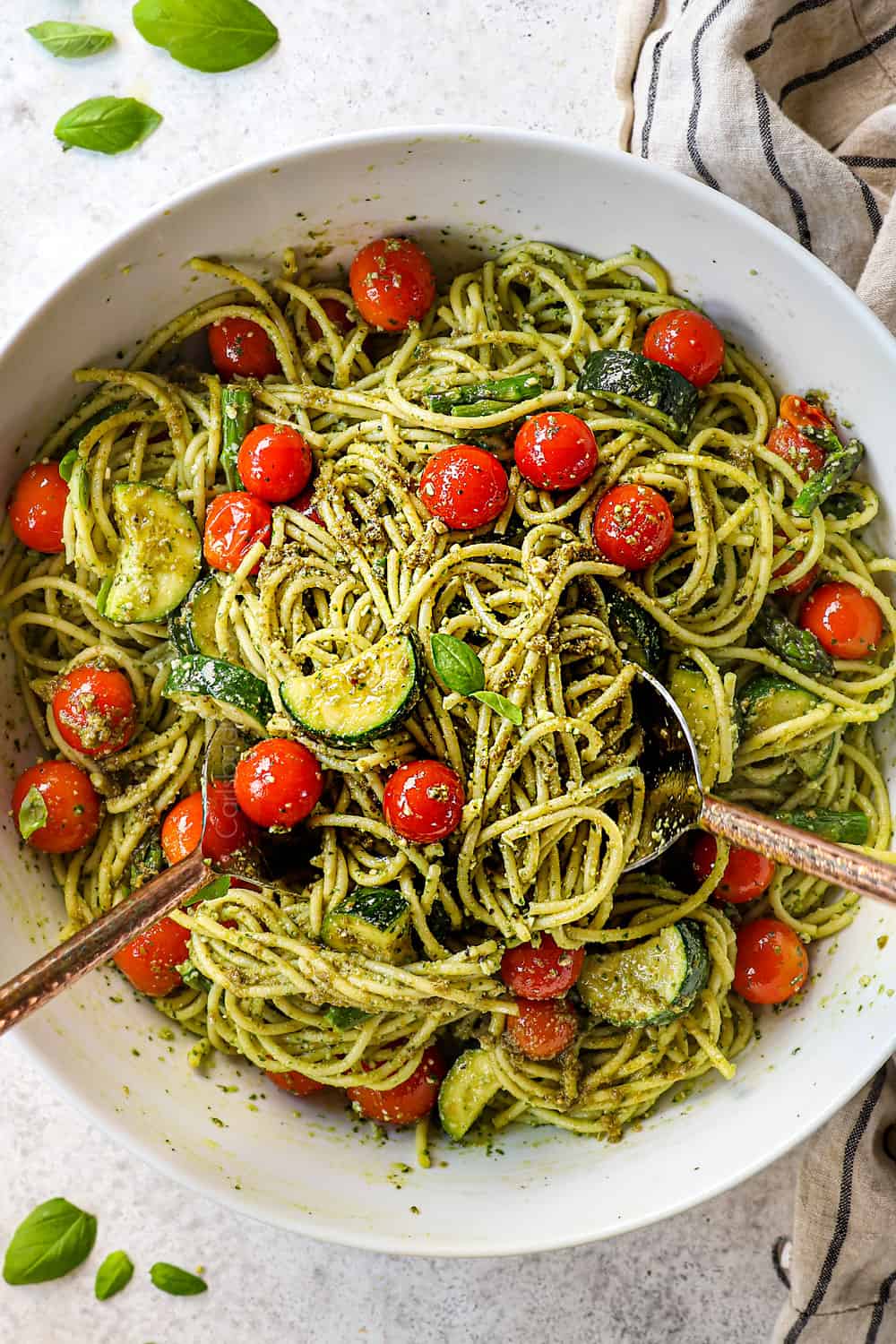

meal prep pesto pasta
This recipe can be made completely in advance (it reheats really well!), or prepare the individual ingredients ahead of time:
•Pesto: Can be prepared and refrigerated for up to three days. It’s a fresh sauce, so it doesn’t have a long shelf life.
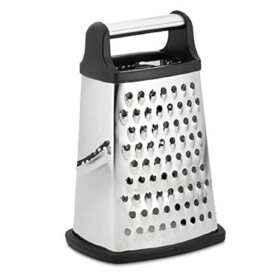
•Parmesan: Can be grated and stored in an airtight container in the fridge until ready to use.
•Veggies: Can be chopped or sliced, then stored in an airtight container in the fridge until ready to roast. I don’t recommend roasting the veggies and then assembling the pasta later for the best texture.

Tips for Pasta with Pesto Sauce
•Add olive oil slowly: Pour in a steady stream while processing to emulsify the sauce.
•Don’t over-process: Excessive blending can make extra virgin olive oil bitter; stir by hand if needed.
•Let flavors meld: Rest pesto at least 15 minutes (ideally 2 hours) before serving for the best flavor.
•Use less water for pasta: Cooking in a large pot with less water keeps it starchy, creating a glossy, thick sauce.
•Add pasta water: Starchy, salted water emulsifies with pesto for a silky, clingy sauce—avoid plain water.
•Mix off heat: Combine pesto and pasta in a bowl or cold pot to preserve color and flavor.
•Adjust to taste: Customize with extra Parmesan, lemon, or freshly cracked pepper to suit your palate.
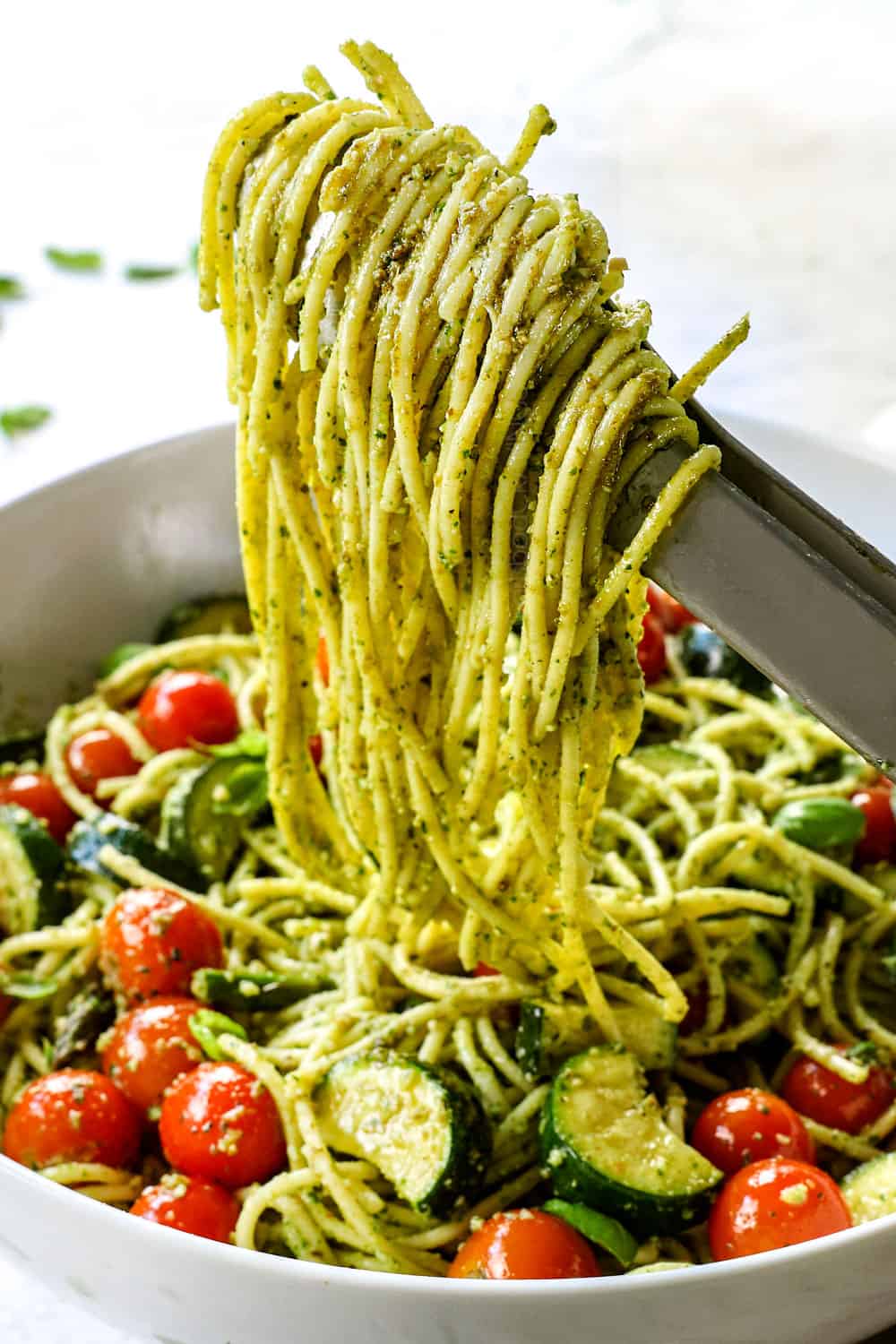

Pesto Pasta Variations
This Pesto Pasta recipe is the ideal recipe to make your own. You can adjust the pesto itself or add protein, sun-dried tomatoes, etc. to the dish. Here are a few ideas:
Pesto Variations:
pasta Variations:
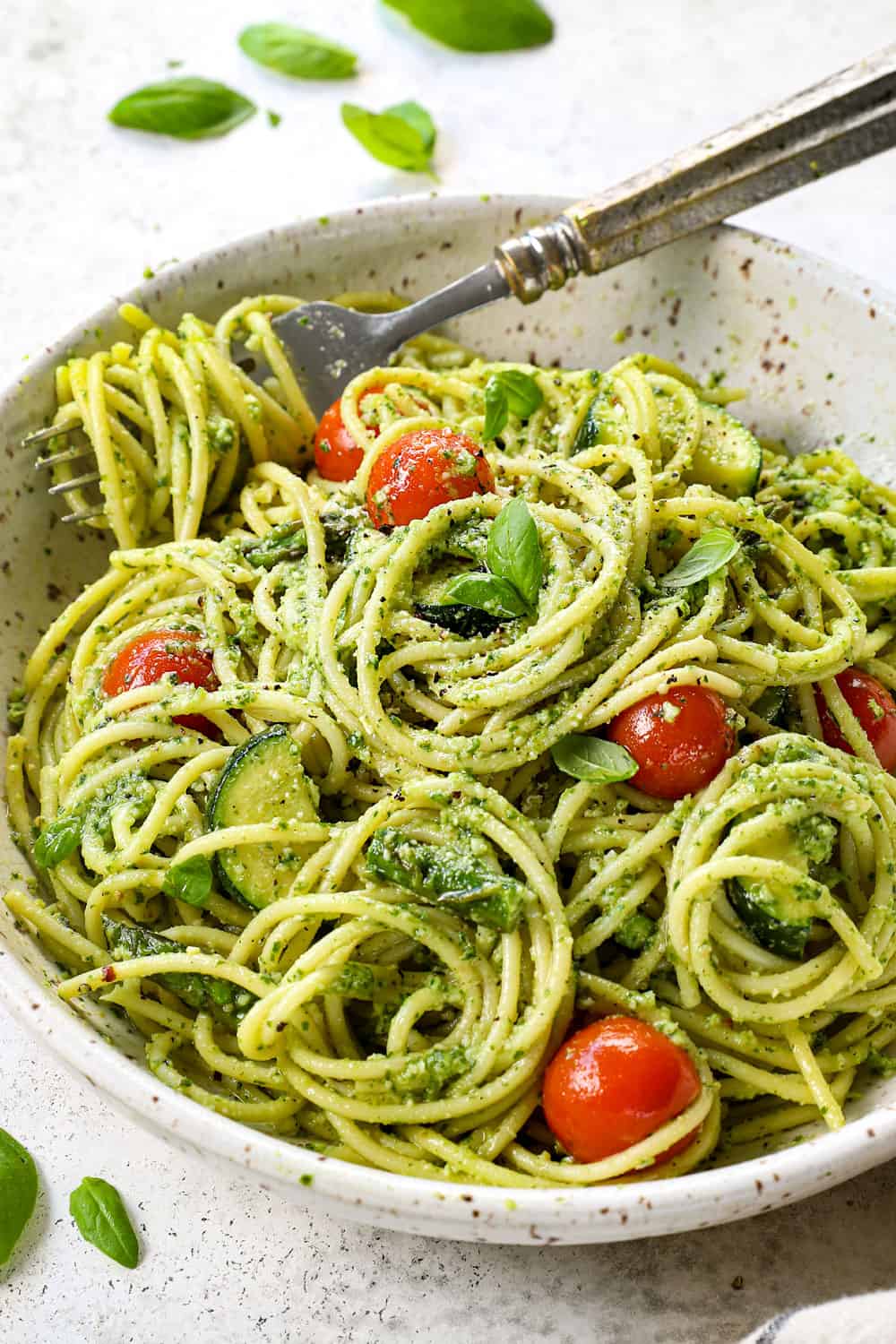

What to Serve with Pesto Pasta
This recipe is extremely versatile. We love it with a bright, refreshing salad along with garlic bread! Try one or more of the following side dishes when making this recipe:
•Salad: Caesar Salad, Spinach Salad, Apple Salad, or Garden Salad.
•Bread: Garlic Bread, Dinner Rolls, Skillet Cornbread, or Breadsticks.
•Fruit: Fruit Salad, Pina Colada Fruit Salad, and Berry Salad.

How to Store Leftover Basil Pesto Pasta
Transfer leftover pesto pasta to an airtight container and refrigerate for up to 3–4 days. If you’ve added proteins or roasted veggies, it will keep just as well.

HOW TO REHEAT Pesto pasta
Basil Pesto Pasta reheats like a dream in the microwave or on the stovetop. You may need to add a little olive oil and/or water if the pasta looks dry.
•Stovetop: Place pasta in a skillet over low heat with a splash of reserved pasta water or a little olive oil. Stir gently until warmed through.
•Microwave: Heat in short 30–45 second intervals, stirring in between, and add a splash of pasta water or cream to keep it from drying out.
TIP! For best flavor and texture, avoid reheating over high heat, which can darken the basil and make the pesto taste bitter.

HOW TO freeze
You may freeze the pesto, but not the Pesto Pasta. Freezing pesto is a great way to use up an abundance of summertime basil or to always have some on hand!
TO FREEZE: Transfer pesto sauce to a freezer-sized bag and freeze flat. When ready to use, let thaw completely in the refrigerator.
Pesto Sauce Pasta FAQs
Classic Pesto is an uncooked basil cheese sauce or condiment made of fresh basil, Parmigiano Reggiano, pine nuts, garlic, extra virgin olive oil, salt and pepper– sometimes with some Pecorino as well. The ingredients are combined in a food processor then finely chopped to create a thick green sauce.
Pesto originated in Genoa, Italy, around the 16th century. The name pesto comes from the Genoese word pestâ, which means to pound or to crush. This refers to the original method of preparing pesto with a mortar and pestle. Today, pesto sauce is incredibly quick and easy to make in the food processor with countless variations.
Basil pesto is bright, herby, and peppery with a hint of anise from the basil, salty, nutty, and rich from the Parmesan, buttery and nutty from the pine nuts, garlicky from the garlic, with a pleasant, rich, herby grassiness from the extra virgin olive oil.
Classic basil pesto, Pesto Alla Genovese, is by far the most popular. In fact, whenever you see the word “pesto” on a restaurant menu or in a recipe without any clarification, it is unmistakably referring to basil pesto. There are, however, thousands of variations of pesto sauce. Pesto can be made with any leafy green instead of basil, such as parsley, arugula, kale, or spinach, any nuts such as almonds, walnuts, cashews, or pistachios, and additions such as lemon zest, sun-dried tomatoes, and even ricotta. So, let your imagination run wild!
This basil pesto is made with natural, fresh ingredients, so it needs to be stored in the refrigerator. It will keep in an airtight container in the fridge for up to 5 days, but is freshest/best/most flavorful if used within the first 3 days. The oil will separate to the top after it has been sitting, so just give the homemade pesto a stir once ready to use.
Browning is a natural process that occurs when the chopped basil is exposed to the air (oxidation). There are three ways to help prevent browning:
1. Limit the exposure to air by pressing plastic wrap directly on the surface of the pesto before sealing to store.
2. Pour a thin layer of olive oil on top of the pesto to cover its surface before sealing to store.
3. Blanch the basil leaves briefly before processing. It locks in the bright green color of the leaves. To blanch the basil, dunk the basil leaves into boiling water for 5 to 10 seconds, then submerge in ice water. Pat the leaves completely dry before making the pesto.
Note that you only need to use one of these tactics if you make the pesto in advance and store it separately before preparing the entire pasta dish!
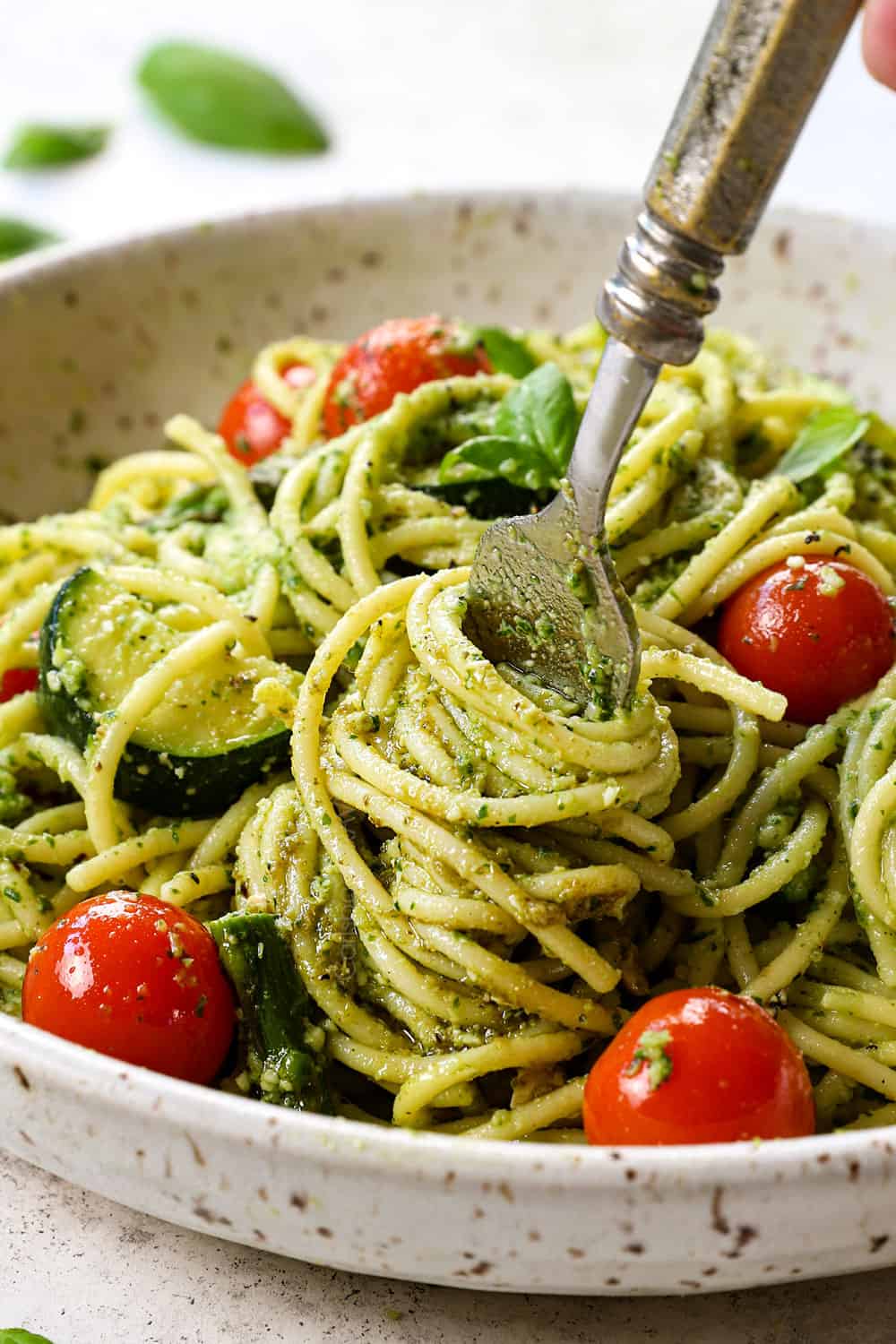

Looking for more Recipes with pesto?
Chicken Pesto Pasta
Pesto Pasta Salad
Pesto Chicken Skillet
Sheet Pan Parmesan Chicken and Vegetables
Crockpot Pesto Mashed Potatoes
TikTok Feta Pasta
WANT TO TRY THIS Pesto Pasta RECIPE?
PIN IT TO YOUR Pasta, dinner or 30 minute recipe BOARD TO SAVE FOR LATER!
FIND ME ON PINTEREST FOR MORE GREAT RECIPES! I AM ALWAYS PINNING :)!
©Carlsbad Cravings by CarlsbadCravings.com
Pasta with Pesto
Save This Recipe To Your Recipe Box
You can now create an account on our site and save your favorite recipes all in one place!
Ingredients
PASTA
- 1 pound linguine or thin spaghetti
- 1 cup reserved pasta water (you will not use all of it)
- 2 tablespoons lemon juice
- 1/2 cup freshly grated Parmigiana Reggiano, or more to taste
PESTO
- 2 cups fresh basil leaves, tightly packed
- 3/4 cup freshly grated Parmigiana Reggiano (use ½ cup if not freshly grated)
- 1/2 cup raw, unsalted pine nuts (the best substitute is cashews)
- 3 garlic cloves, peeled
- 2 tablespoons lemon juice
- 1/2 teaspoon salt
- 1/4 teaspoon pepper
- 1/2 cup extra virgin olive oil
Instructions
- Prep: Preheat the oven to 400°F. Begin boiling the water for the pasta.
- Pesto: Preheat a skillet over medium-high heat (without any oil). Add pine nuts and toast until golden in spots. Immediately transfer the nuts to a food processor to prevent them from continuing to cook.on’t continue to cook.
- Add the remaining pesto ingredients EXCEPT the olive oil (basil through pepper) to the food processor. Pulse until finely chopped.
- With the food processor running, slowly drizzle in the olive oil until fully combined; set aside.
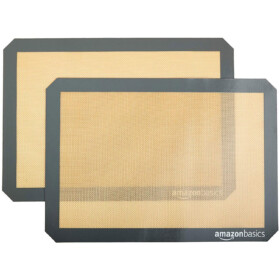
- Roasted Vegetables: Add vegetables to a baking sheet lined with foil or a non-stick mat. Toss with 1 tablespoon olive oil, 2 tablespoons homemade pesto, ½ teaspoon salt, and ¼ teaspoon pepper. (There will be a generous amount of oil/pesto – this will transfer to the pasta later). Roast at 400°F in a single layer for 12-15 minutes or until asparagus is crisp-tender.
- Pasta: Meanwhile, cook pasta al dente in generously salted water according to package directions. Reserve 1 cup of pasta water before you drain the pasta.
- Combine: Add drained pasta to a very large mixing bowl or cold pot, OFF HEAT, along with all of the pesto, ¼ cup reserved pasta water, and 2 tablespoons lemon juice. Toss to coat the pasta. Stir in roasted vegetables and pan juices; toss again, adding reserved pasta water a little at a time if needed to make the pasta silky and saucy rather than dry and sticky. You can also alternate the reserved pasta water with a drizzle of olive oil if you like. Taste, and season with additional salt, pepper, and lemon juice if desired.
- Serve immediately, garnished with plenty of freshly grated Parmigiana Reggiano, and freshly cracked pepper.
Video
Notes
Tips and Tricks
- Watch the olive oil: Different olive oils have different flavors and strengths, even extra virgin olive oil, so choose what you like best.
- Don’t over-process the olive oil or your pesto sauce will taste bitter: Extra virgin olive oil is super sensitive to mechanical agitation – as in a blender or a food processor. Meaning, if you over-process the oil, its polyphenols can break away from the fatty acids causing oxidation which will make the pesto taste bitter. If you’re worried about this, you may stir the olive oil in by hand.
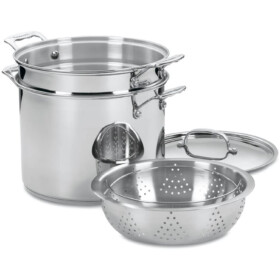
- Cook the pasta in less water. I recommend cooking the pasta in a large Dutch oven so that it will fit the length of the dish, allowing you to use less water. This will make the water extra starchy, which creates the most luscious glossy, thick pesto sauce (see below).
- Adjust the Pesto Pasta recipe to taste: As with all recipes, it is important to make this recipe right for YOU, especially because pesto is made with living ingredients that will vary in brightness, saltiness, and overall intensity of flavor. You may find you need extra Parmesan, an extra squeeze of lemon or loads of freshly cracked pepper. So, prepare to be flexible!
- Recipe variations: See post for lots of recipe variations such as making it creamy, adding chicken, using different nuts, etc.
- Vegan Pesto Pasta: Substitute the cheese with a non-dairy cheese or add 3 tablespoons of nutritional yeast. Nutritional yeast is nutty and cheesy.
- Gluten Free Pesto Pasta: Use your favorite gluten free pasta. The rest of the ingredients are gluten free.
Meal Prep
This Pesto Pasta recipe can be made completely in advance or you can prepare the individual ingredients ahead of time:- Pesto: Can be prepared and refrigerated for up to three days. It’s a fresh sauce, so it doesn’t have a long shelf life.
- Parmesan: Can be grated and stored in an airtight container in the fridge until ready to use.
- Veggies: Can be chopped or sliced, then stored in an airtight container in the fridge until ready to roast. I don’t recommend roasting the veggies and then assembling the pasta at a later date. Roast the veggies just before assembling the pasta for the best flavor and texture.
How to store and reheat
Basil Pesto Pasta reheats like a dream in the microwave or on the stovetop. You may need to add a little olive oil and/or water if the pasta looks dry.- Microwave: Microwave small portions for 1 minute, stir, then continue to heat at 30-second intervals until warmed through.
- Stove: For larger portions, reheat pasta gently on the stove over medium-low heat, stirring occasionally.
Want To Make This Recipe?

Did You Make This Recipe?
Tag @CarlsbadCravings and Use #CarlsbadCravngs
Leave a Review, I Always Love Hearing From You!


Brenda says
This was amazing and so easy to make, made with fresh veggies from my friends garden .
Jen says
That sounds heavenly! I am so glad you enjoyed the recipe!